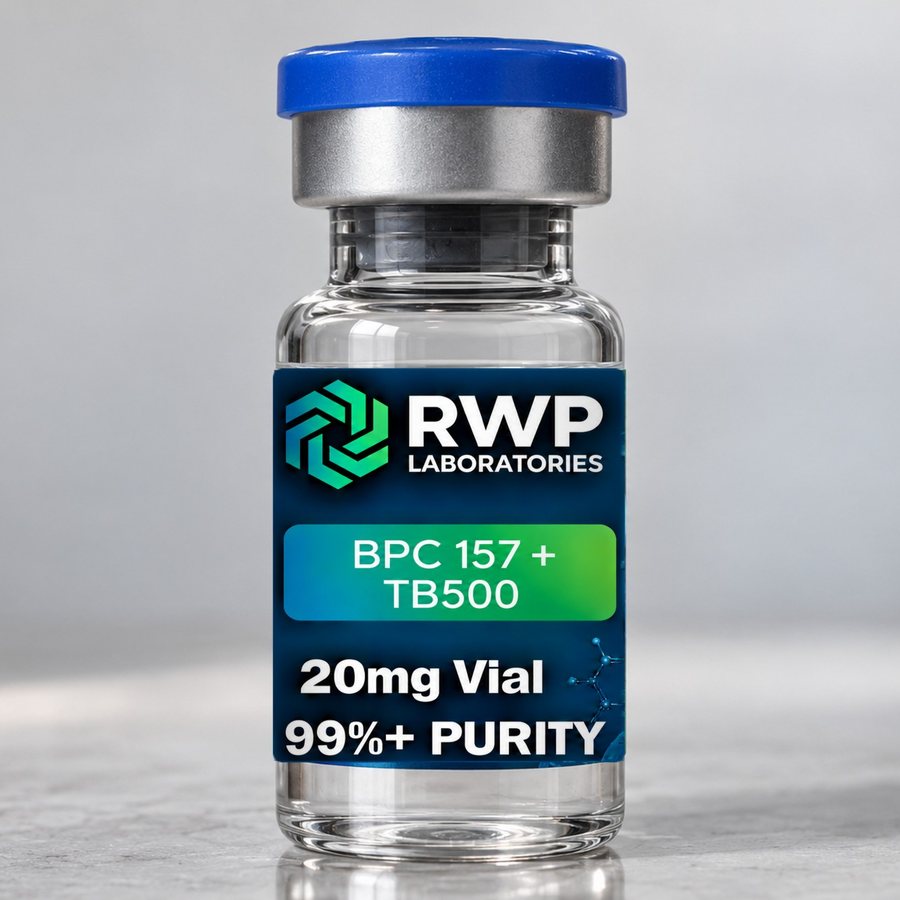
Peptides sit between small molecules and proteins. They are short chains of amino acids, usually defined as fewer than about 50 residues, held together by peptide bonds. They are larger than most small molecules, yet small enough to be made entirely by chemical synthesis.
This primer covers how synthetic peptides are written, how they are produced and characterized, and what documentation a buyer should expect.
What makes a molecule a peptide
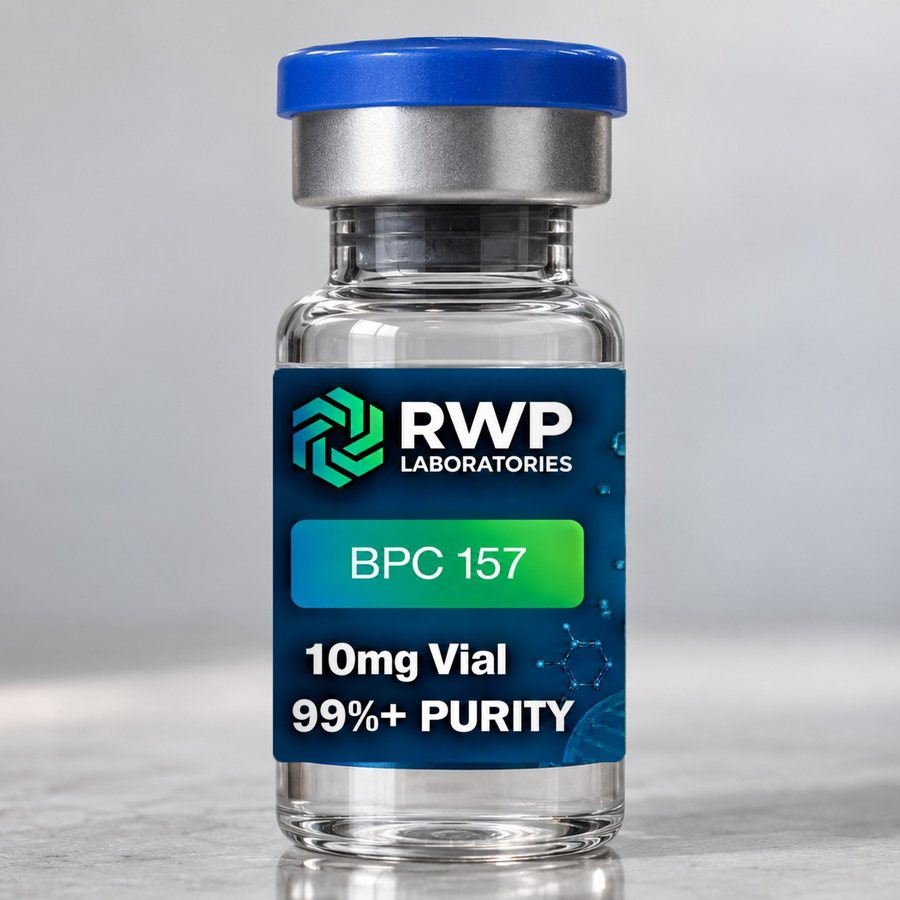
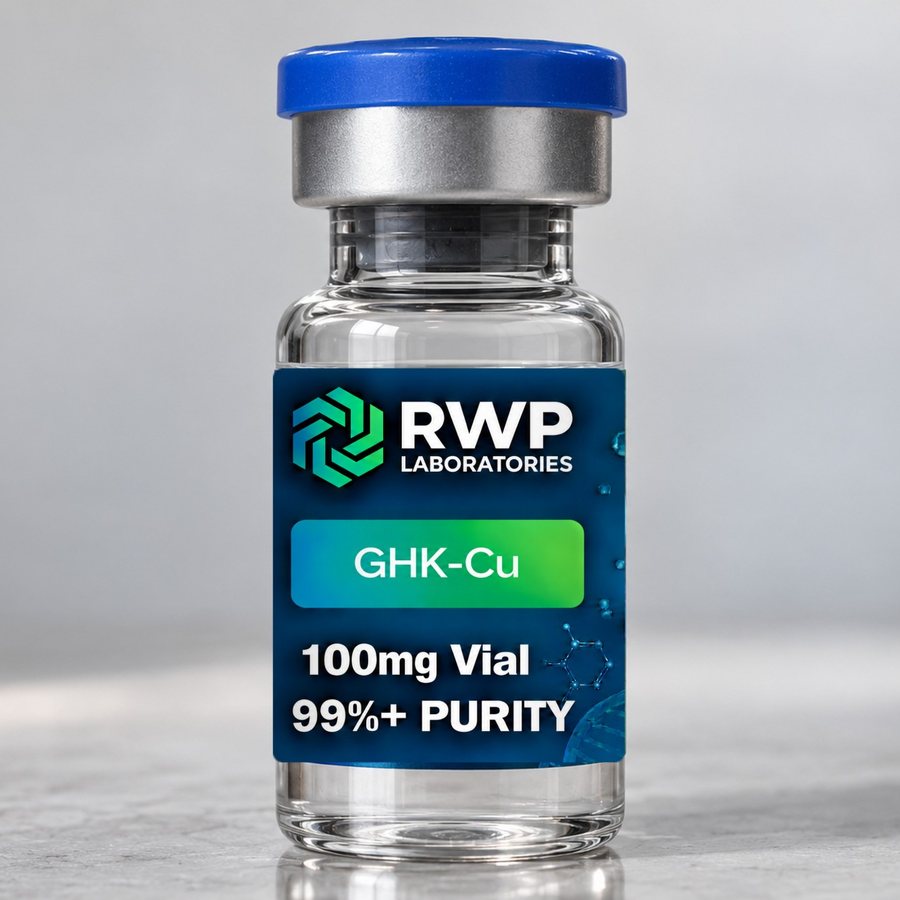
Every peptide is a linear (or cyclized) sequence of amino acids. The sequence is written from the N-terminus to the C-terminus, either in one-letter code (GEPPPGKPADDAGLV for BPC-157) or three-letter code (Gly-His-Lys for GHK).
Many synthetic peptides go beyond the 20 standard amino acids. Common structural modifications include:
- Non-coded residues such as α-aminoisobutyric acid (Aib), which restricts backbone conformation.
- D-amino acids, the mirror-image forms of the standard residues.
- Terminal caps such as N-terminal acetylation or C-terminal amidation, which remove terminal charges.
- Cyclization through disulfide bridges or lactam bonds, which constrains the peptide's shape.
How synthetic peptides are made
Nearly all research peptides are produced by solid-phase peptide synthesis (SPPS), a method developed by Bruce Merrifield in the 1960s. The first amino acid is anchored to an insoluble resin bead, and each subsequent residue is coupled one at a time, with protecting groups preventing unwanted side reactions.
When the chain is complete, the peptide is cleaved from the resin, usually with trifluoroacetic acid (TFA). The crude product contains the target sequence plus deletion sequences (missing one residue), truncations and side-chain byproducts. Preparative reverse-phase HPLC separates the target from these impurities, and the purified fractions are freeze-dried (lyophilized) into the white powder or cake that ships in the vial.
What the RUO label covers
The Research Use Only label tells everyone in the supply chain that the material is for laboratory research, analytical work and method development only. It is not a drug, food, cosmetic or supplement. Reputable suppliers enforce this: they publish technical data only, they do not sell syringes or needles, they require purchasers to acknowledge the restriction, and they refuse orders that suggest another use.
What documentation to expect
At minimum, each lot should come with a certificate of analysis showing:
- HPLC purity, with the chromatogram
- Mass spectrometry confirming identity against the theoretical molecular weight
- The lot number that matches the vial label
- The test date and the laboratory that performed the analysis
Our guide to reading a COA walks through each section, and every lot we sell is published in the COA Library.
Common classes of research peptides
Most peptides in a research catalog fall into a handful of structural families, each with its own handling quirks:
| Structural family | Examples | Handling note |
|---|---|---|
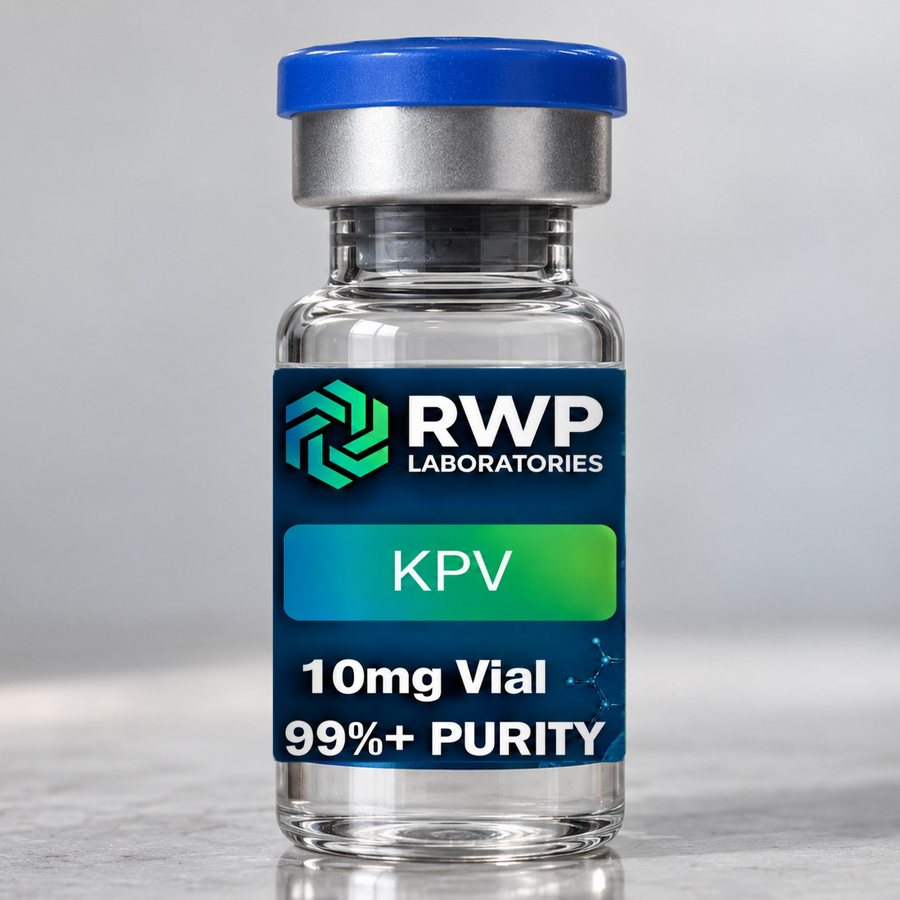
| Tripeptides | KPV, GHK-Cu | Hygroscopic powders; keep sealed and dry |
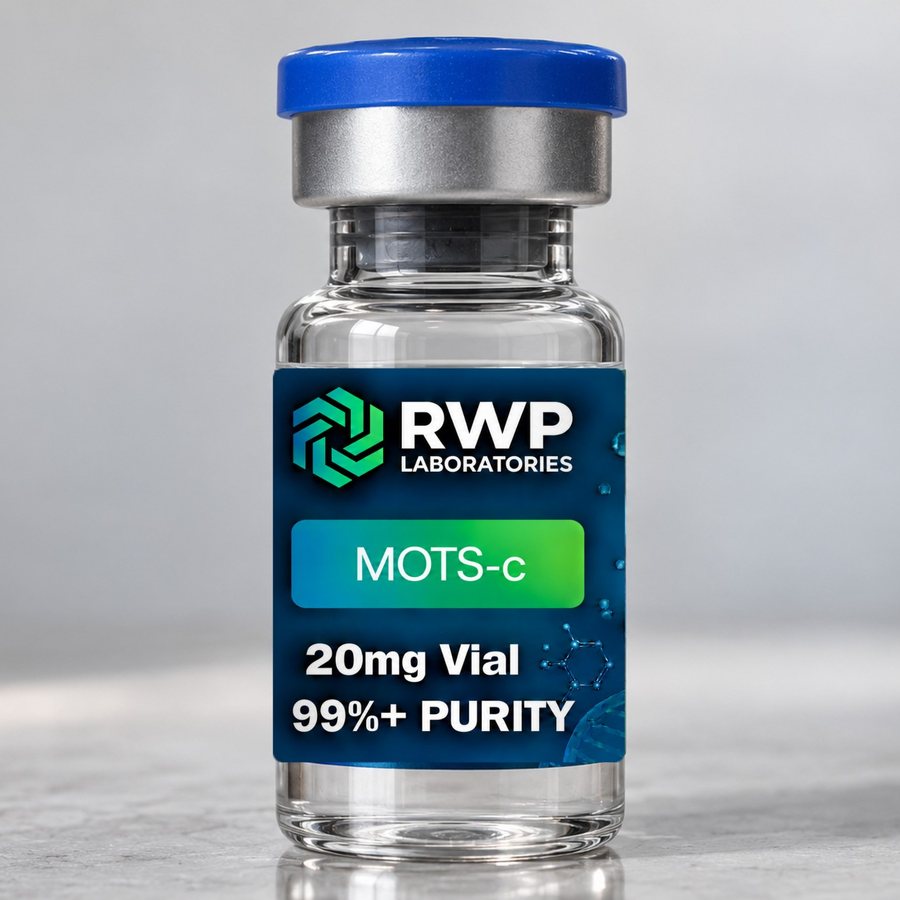
| Medium linear peptides | BPC-157, MOTS-c | Check for Met, Trp or Cys residues, which oxidize |
| Larger peptides | TB-500 (thymosin β4) | Identity is best confirmed by mass spectrometry |
Why storage conditions matter
Peptides are chemically sensitive, and a few reactions account for most of the degradation seen in stored material:
- Oxidation. Methionine, tryptophan and cysteine residues react with oxygen, which shows up as +16 Da peaks in the mass spectrum.
- Deamidation. Asparagine and glutamine can convert to aspartate and glutamate over time.
- Moisture. Lyophilized powders are hygroscopic. Absorbed water speeds up both reactions above.
- Light. Tryptophan and tyrosine are photosensitive.
Sealed, cold, dry and dark storage slows all of these. Our storage guide covers the details.
A supplier checklist
- Is there a COA for the specific lot, not a generic product sheet?
- Does the COA include the actual chromatogram and mass spectrum?
- Is the testing laboratory named, and is it independent of the seller?
- Is the counter-ion (acetate or TFA) stated?
- Is the material shipped and stored in a way that protects it from heat and moisture?
- Does the supplier publish technical data only, without claims?
Our own answers to each of these are on the quality standards page.
References
- Solid phase peptide synthesis. I. The synthesis of a tetrapeptide.
Merrifield RB. J Am Chem Soc. 1963.
Find on PubMed - Advances in Fmoc solid-phase peptide synthesis.
Behrendt R, White P, Offer J. J Pept Sci. 2016.
Find on PubMed
Published March 10, 2026 by the RWP Laboratories research team. This article covers chemistry, analytical testing and storage for laboratory use only.
For research use only. All products are sold strictly for laboratory research and analytical use and are not for human consumption. They are not drugs, foods, cosmetics or supplements. We do not sell syringes or needles.